Can ChatGPT Generate Images? (2026 Guide)
 Carlos Garcia9/29/2026
Yes. ChatGPT generates images, and it has done for long enough that the interesting question is no longer whether it can but whether it is the right tool for what you need.
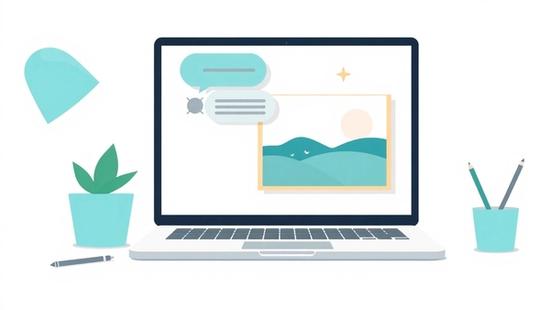
Image generation is not a separate product you bolt on. You describe a picture in the same conversation where you ask for anything else, and it appears. You can then ask for changes in plain language rather than starting over.
That conversational editing loop is the part that catches people out, in both directions. It makes small revisions far easier than traditional image tools. It also makes it tempting to keep nudging a prompt that was never going to work.
This guide covers how image generation works inside ChatGPT in 2026, what the current model is genuinely good at, what each plan tier gets, where it reliably fails, and when a dedicated design tool is the better answer.
The Short Answer
ChatGPT generates images from text prompts, edits images you upload, and refines its own output through follow-up instructions, all inside a normal chat.
The capability is available on the free plan with limits, and on the paid plans with higher limits and access to the slower, more deliberate generation mode. OpenAI does not publish exact per-plan image counts, so treat any specific number you read as an estimate and check your own account.
What it is not is a replacement for a designer or for a professional image editor. It is extremely good at getting you to a usable draft in one minute and noticeably worse at getting you from that draft to something exact.
Publishing AI-generated visuals and wondering whether it helps or hurts your rankings? Get a free SEO audit and find out what is actually moving your traffic.
What Model Generates the Images
The image system in ChatGPT is OpenAI's GPT Image family, which replaced DALL-E. It handles both generation from scratch and editing of an existing image.
The current version
The latest release is ChatGPT Images 2.5, introduced on 8 September 2026. OpenAI's release notes describe it as delivering sharper detail, more precise editing, and faster generation than the version before it, with roughly half the latency of the previous model.
That release also brought several interface additions: a Templates gallery you can open and customise instead of writing a prompt from nothing, a sketch-to-image feature on mobile that turns a rough drawing into a finished image, full-screen editing and commenting on mobile, and the ability to share a prompt so someone else can recreate what you made.
How it got here
The lineage is useful context, because it explains why advice written even a year ago reads oddly now.
- GPT Image 1, March 2025: the first model in the family, replacing DALL-E in ChatGPT.
- GPT Image 1 Mini, October 2025: a much cheaper option, aimed mainly at developers.
- GPT Image 1.5, December 2025: substantially faster, and a fix for the premature cropping and warm colour cast that plagued the first release.
- GPT Image 2, April 2026: added reasoning to the generation step, so complex multi-part prompts held together better.
- GPT Image 2.5, September 2026: the current version, with the sketch feature and the latency reduction.
The practical takeaway is that complaints about ChatGPT images you may remember from 2025, particularly cropping and colour bias, were addressed in specific later releases rather than lingering.
Instant and thinking generation
Recent versions offer two ways to generate. One returns an image quickly. The other spends longer planning before it draws, which handles complicated prompts with several interacting elements considerably better.
The faster mode is available broadly. The deliberate mode is a paid-plan feature. If a prompt with four or five requirements keeps losing one of them, that difference is usually the explanation.
How to Generate an Image in ChatGPT
The workflow is short, and the parts people skip are the parts that matter.
- Start a normal chat and describe the image you want in a sentence or two. Do not write a keyword list; write a description.
- Say what kind of image it is before you say what is in it. "Flat vector illustration", "product photograph", "pencil sketch" steers the result more than any other single word.
- Name the composition. Where the subject sits, what fills the background, whether it is a close-up or a wide shot.
- Wait for the first result and treat it as a draft, not an attempt. It exists so you have something concrete to react to.
- Ask for one change at a time. "Make the background lighter" works. "Make the background lighter, move the laptop left, add a plant, and change the mood" produces a different image rather than an edited one.
- To edit your own image, upload it first, then describe the change. The model works from what you gave it rather than reinventing it.
- If three revisions have not converged, rewrite the original prompt instead of continuing. Conversational editing drifts, and a clean restart is usually faster.
Step five is the one most people get wrong. The editing loop is not a layer stack. Every request re-renders, so batching instructions gives the model licence to reinterpret everything.
What It Is Genuinely Good At
Some jobs it does so well that using anything else is wasted effort.
Blog and article header images. A described scene in a consistent house style, produced in seconds, with no licensing question attached. This is the highest-value everyday use by a wide margin.
Concept and mood exploration. Six variations on an idea before committing to any of them. As a thinking tool rather than a production tool, it is excellent.
Diagram and layout mockups. Not accurate technical diagrams, but convincing placeholder interfaces and rough arrangements for a deck.
Editing images you already own. Removing an object, changing a background, restyling a photograph. The instruction-following here is better than the from-scratch generation, and it is underused.
Getting unstuck. When you cannot picture what you want, generating something wrong is an unusually efficient way to work out what right looks like.
Need content that ranks, not just content that looks good? Request a free SEO audit and see where the gaps are.
Where It Still Fails
The limitations are consistent and worth knowing before you build a workflow on top of them.
Text inside images
Legible text remains the weak point. Short words often come out correctly. Sentences, labels, and anything small tend to arrive garbled, misspelled, or in an invented alphabet. Ask for placeholder shapes where text would go and add real text afterwards in a proper editor.
Multiple faces
One person is usually fine. Groups degrade: faces blur, distort, or merge. Any image whose point is several recognisable people is the wrong job for this tool.
Non-Latin scripts
Chinese, Arabic, and Hebrew characters are noticeably less reliable than Latin ones. If your audience reads in those scripts, do not let the model render the type.
Exact reproduction
It cannot reliably produce the same character, product, or person twice across separate images. Style consistency is achievable with a fixed style paragraph. Subject consistency is not, which makes multi-image sets frustrating.
Specific art styles and precise instructions
Broad styles land well. Narrow ones, particularly a named illustrator's look or an exact brand treatment, drift. So do instructions about counting: "exactly five icons" often produces four or six.
Brand and likeness limits
There are guardrails around real people and recognisable brand assets, and they are the right guardrails. Expect refusals rather than workarounds, and never assume a logo it drew is yours to use.
ChatGPT Images vs the Alternatives
Whether it is the right choice depends on what happens to the image afterwards.
Against dedicated image generators
Purpose-built tools offer finer control: seeds, strength sliders, style references, region-specific editing. For an art director iterating towards something exact, that control is worth the extra learning.
ChatGPT wins on speed and on the fact that it understands a sentence. For anyone who is not a visual professional, that trade is heavily in its favour.
Against other assistants
Google Gemini and Microsoft Copilot both generate images too, and the honest answer is that the gap between the leading assistants on image quality is now small and changes with each release. Pick based on which assistant you already pay for rather than on image benchmarks.
Against design tools
Canva, Figma, and the Adobe tools are still where you go when you need exact dimensions, real text, brand colours, and a file you can hand off. The strongest workflow is generating a base in ChatGPT and finishing it in one of those, not choosing between them.
Against stock photography
Stock gives you real people, real places, and clear licensing. Generated images give you specificity and never look like the same photograph every competitor also bought. For editorial illustration, generation usually wins. For anything that must look like documentary reality, stock still does.
Not sure your content is pulling its weight in search? Book a free SEO audit and get a prioritised list of fixes.
How Many Images Do You Get
This is the most-asked follow-up and the hardest to answer usefully.
OpenAI does not publish a fixed image allowance per plan, and when it updates the image model it has stated that existing limits are unchanged rather than naming them. Limits also flex with demand, which is why two people on the same plan report different numbers.
What is reliably true: the free plan can generate images but hits a cap and then waits, paid plans get materially more headroom, and the highest tiers get priority when the system is busy. If you need a hard number, generate until you are throttled and note where it stopped; that is more accurate than any article, including this one.
For SEO and content work, the practical constraint is rarely the cap. It is that a hero image takes two or three attempts, so budget attempts rather than images.
Final Thoughts
ChatGPT generates images well enough that for most content work the question has quietly become settled. Describe what you want, get a draft in seconds, refine it in plain language, and move on. For article headers, concept work, and editing images you already have, it is the fastest route to something usable.
Where it still disappoints is precision. Text, groups of faces, repeated subjects, and exact counts remain unreliable, and no amount of prompt refinement fixes a limitation that is structural. Knowing which of those walls you are about to hit saves more time than any prompting trick.
The sensible posture is to use it for the draft and a real editor for the finish, and to spend your attention on whether the image earns its place in the article at all. If you are also working out which model to reach for in the rest of your workflow, our guide on which ChatGPT model you should use covers the same trade-offs on the text side.
Turning AI-assisted content into real search traffic? Start with a free SEO audit and see what to fix first.