What Sources Are Available in Google Analytics? (2026 Guide)
 Carlos Garcia5/25/2026
If you've been digging through Google Analytics 4 acquisition reports and seen the "Source" dimension — and wondered exactly which sources GA4 recognizes out of the box, how they get classified, and what happens to sources GA4 doesn't know about — you're not alone. Sources available in Google Analytics 4 are not a fixed list — GA4 captures any source string a session arrives with, but it recognizes ~60 well-known sources (google, bing, facebook, instagram, youtube, linkedin, twitter, tiktok, baidu, yandex, naver, duckduckgo, ecosia, brave, yahoo, ask, aol, mail.ru, and others) and automatically maps them to default channel groupings like Organic Search, Paid Search, Organic Social, and Email; anything outside that list — including any string you pass through utm_source — also becomes a Source, but lands in (other) or Referral unless you explicitly classify it. This guide explains exactly what a Source is in GA4, the sources GA4 recognizes natively, where to find them, how custom sources work, and how Source interacts with Medium and Channel Grouping in 2026.
Free SEO + AI Search Audit. Knowing which Sources send you traffic is only half the picture. The other half: AI search engines like ChatGPT, Claude, Perplexity, and Gemini now drive serious buyer-intent visits, and most of them land in your GA4 as "Direct" or "Referral." Run your free audit → to see where your site actually stands across both Google AND AI search.
What Is a Source in Google Analytics? The Direct Answer
In simple terms, a Source in GA4 is the specific origin of a session — typically a website domain, a search engine name, or a campaign source value passed via UTM. It's paired with Medium (the type of source — like organic, cpc, email, referral) to form the classic source / medium dimension.
Examples:
google / organic— a free click from Google Searchgoogle / cpc— a paid click from Google Adsfacebook.com / referral— a click from a link on Facebooknewsletter_may / email— a click from a UTM-tagged email(direct) / (none)— a session with no detectable source
GA4 doesn't ship with a hard "allowed sources" list. Any string sent via utm_source becomes a Source. But GA4 does maintain an internal list of ~60 well-known sources (search engines, social platforms, and big email providers) that it auto-classifies into channel groups without UTMs.
The Default Sources GA4 Recognizes Out of the Box
These are the sources GA4 automatically classifies — no UTMs required.
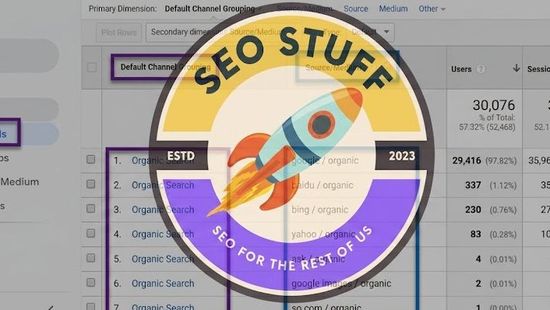
Search Engine Sources (auto-classified as Organic Search)
GA4's built-in search engine list includes:
- google — Google Search
- bing — Microsoft Bing
- yahoo — Yahoo Search
- duckduckgo — DuckDuckGo
- baidu — Baidu (China)
- yandex — Yandex (Russia)
- naver — Naver (Korea)
- daum — Daum (Korea)
- ecosia — Ecosia
- ask — Ask.com
- aol — AOL Search
- brave — Brave Search
- seznam — Seznam (Czech Republic)
- kvasir — Kvasir (Norway)
- rambler — Rambler (Russia)
- lycos — Lycos
- so.com — 360 Search (China)
- sogou — Sogou (China)
When a session arrives from one of these domains with no UTMs, GA4 reads the referrer, identifies the search engine, and tags the session as <source> / organic.
Social Sources (auto-classified as Organic Social)
GA4's built-in social platform list includes:
- facebook / facebook.com / m.facebook.com / l.facebook.com
- instagram / instagram.com / l.instagram.com
- twitter / twitter.com / t.co / x.com
- linkedin / linkedin.com / lnkd.in
- youtube / youtube.com / m.youtube.com
- tiktok / tiktok.com
- pinterest / pinterest.com
- reddit / reddit.com / out.reddit.com
- snapchat / snapchat.com
- whatsapp / whatsapp.com
- telegram / t.me
- quora / quora.com
- medium / medium.com
Click-throughs from these platforms land as <source> / referral, then get reclassified to Organic Social by the default channel grouping rules.
Video Sources (auto-classified as Organic Video)
- youtube.com
- vimeo.com
- dailymotion.com
- twitch.tv
- tiktok.com (overlaps with Organic Social — GA4's logic picks Video when watch-page referrers are detected)
Shopping Sources (auto-classified as Organic Shopping)
- amazon.com / amazon.co.uk / etc.
- ebay.com
- etsy.com
- walmart.com
- alibaba.com
Email Sources (auto-classified as Email)
GA4 doesn't auto-detect email — it relies on utm_medium=email. Common source values you'll see when sessions are properly tagged:
- mailchimp
- klaviyo
- hubspot
- brevo
- convertkit
- <your_newsletter_name>
Free SEO + AI Search Audit. Most teams obsess over Source attribution in GA4 — but if AI search engines are the new front door for your buyers, your Sources list is missing the most important channel. Get a free audit to see your visibility across Google AND every major AI search platform.
Sources From UTM Parameters
The mechanism behind every non-Google source.
When you build a tagged link like:
https://yoursite.com/?utm_source=newsletter&utm_medium=email&utm_campaign=may_promo
GA4 reads utm_source=newsletter and stores newsletter as the Source. The medium (email) then triggers the Email default channel grouping rule.
You can pass any string as a source — partner_xyz, qr_code_print_ad, affiliate_johndoe, anything. GA4 stores it verbatim. Just be consistent: Newsletter and newsletter are treated as different sources.
Sources From Referrers
When a session arrives with no UTMs but a detectable referrer, GA4:
- Reads the referrer URL
- Extracts the domain
- Checks it against the built-in source list (search engines, social platforms, video, shopping)
- If it matches: applies the right channel grouping automatically
- If not: stores the domain as the source and classifies as Referral
So a click from medium.com/somearticle arrives as medium.com / referral, then gets reclassified as Organic Social because Medium is on the social list. A click from a random blog like johndoe.com/post arrives as johndoe.com / referral and stays in the Referral channel.
Where to Find Source Reports in GA4
The specific places.
Acquisition → Traffic Acquisition
The main report. Add Session source or Session source / medium as a secondary dimension. This shows your top traffic sources by sessions, engaged sessions, and conversions.
Acquisition → User Acquisition
Same as Traffic Acquisition but attributed to first-touch source for each user.
Explorations
Build custom reports that combine Source with other dimensions (landing page, country, device, conversion event) for deeper analysis.
Reports → Engagement → Pages and Screens
Add Source as a secondary dimension to see which sources drive traffic to which pages.
Real-Time
Watch live sessions land and confirm which Sources they're arriving with — useful for verifying UTM tagging on new campaigns.
How Source Differs From Related Dimensions
A quick disambiguation.
Source vs Medium
- Source: where the traffic came from (google, facebook, newsletter_may)
- Medium: the type of traffic (organic, cpc, email, referral, social)
- Always paired in reports as
source / medium
Source vs Channel Group
- Source: granular — one specific origin
- Channel Group: aggregated bucket of similar sources (e.g., Organic Search rolls up google + bing + duckduckgo + others into one channel)
Source vs Referrer
- Source: GA4's dimension value (sometimes the same as the referrer domain, sometimes overridden by UTMs)
- Referrer: the literal HTTP referrer header from the browser
Source vs Campaign
- Source: the platform or origin
- Campaign: the specific marketing campaign (typically passed via
utm_campaign)
Source vs Default Channel Group
The Default Channel Group is GA4's mapping rule that translates Source + Medium combinations into named channels (Organic Search, Paid Search, etc.). The Source itself is just the raw value.
How to Read Source Reports
Practical patterns.
1. Always Pair Source With Medium
source / medium together tells you a complete story. Just "google" is ambiguous (organic? paid?). google / organic vs google / cpc is a real answer.
2. Compare Source Performance Across Conversion Rates
Sort by conversion rate, not just sessions. A small source converting at 8% is more interesting than a big source converting at 0.4%.
3. Watch for "(other)" and "(not set)"
If a chunk of sessions show up as (other) or (not set), GA4 couldn't classify them. That usually means broken UTM tagging or a referrer GA4 doesn't recognize.
4. Look at New vs Returning by Source
Add new vs returning user as a secondary dimension. Some sources (paid, social) lean new-visitor heavy. Some (email, direct) lean returning.
5. Compare Engagement Quality by Source
Engagement rate, engaged sessions per user, and event count per session vary wildly by source. Use these to evaluate source quality, not just session volume.
6. Track AI Search Sources Separately
In 2026, AI search engines (chatgpt.com, perplexity.ai, claude.ai, gemini.google.com, copilot.microsoft.com) are increasingly major sources. Most show up as Referral by default in GA4, since they're not in the built-in search engine list yet. Create a custom channel group to bucket them.
Custom Sources You'll Want to Track
Common ones that need explicit UTMs.
AI Search Engines
GA4 doesn't yet auto-classify AI search engines as search sources. Tag your share/recommend links from AI-friendly content with utm_source=chatgpt&utm_medium=ai_search (or similar) and create a custom channel grouping rule.
Podcast Show Notes
utm_source=podcast_name&utm_medium=podcast. Otherwise these show up as Direct since podcast players don't pass referrers.
QR Codes
utm_source=qr_print&utm_medium=offline. Otherwise: Direct.
Mobile App Notifications
utm_source=app_push&utm_medium=push. App browsers strip referrers.
Affiliate Networks
utm_source=<affiliate_id>&utm_medium=affiliate. Don't leave them lumped in with Referral.
SMS Campaigns
utm_source=sms_blast&utm_medium=sms. SMS clicks don't pass referrers.
Free SEO + AI Search Audit. If you're noticing more "Direct" or "Referral" traffic creeping in, you're probably losing visibility into AI search referrals. A free audit shows you which queries AI engines are answering — with and without your site. Run yours →
Limitations of GA4 Source Data
A few honest caveats.
The "available" list isn't published. Google maintains the built-in source list internally and updates it without notice. Treat this guide as accurate as of 2026 but expect minor changes.
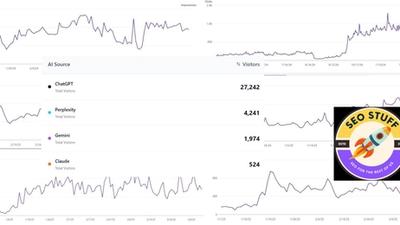
AI search engines aren't auto-classified yet. ChatGPT, Claude, Perplexity, and Gemini referrals show as Referral, not Organic Search, until Google updates the default channel grouping.
Same source different cases get split. Facebook and facebook are different Source values in reports. Always lowercase your UTM sources.
Self-referrals can pollute Sources. If GA4 picks up a referrer from your own subdomain, it'll show as a referral. Configure the Internal Domains list in Admin → Data Streams → Tagging settings.
Source attribution depends on consent. Users who decline analytics consent contribute modeled session counts but no source detail.
Source doesn't carry across the funnel cleanly. GA4 uses Session-scoped vs User-scoped attribution. Choose the right one for your analysis.
Free SEO + AI Search Audit. GA4 only shows you the channels it can classify — and AI search isn't one of them yet. A free SEO + AI audit catches what your reports miss. Get yours →
How to Add a Source GA4 Doesn't Recognize
Three steps.
1. Tag Your Inbound Links With UTMs
Use utm_source=<your_source>&utm_medium=<appropriate_medium> on every external link you control.
2. Update the Default Channel Group (Optional)
In Admin → Data Display → Channel groups, customize the rules to route your new source into the right channel bucket. For example, route utm_source=chatgpt into a custom "AI Search" channel.
3. Create a Custom Channel Group
If you want to keep the default GA4 channel group intact but also have your own view, create a custom channel group. Useful for comparing scenarios without rewriting defaults.
Final Thoughts
Sources in Google Analytics aren't a fixed list — GA4 captures any source string a session arrives with, but it recognizes about 60 well-known sources out of the box (Google, Bing, Facebook, Instagram, YouTube, LinkedIn, TikTok, Baidu, Yandex, Naver, DuckDuckGo, Ecosia, Brave, Yahoo, and others) and automatically maps them to the right default channel groupings. Anything outside that list — including any string you pass through utm_source — also becomes a Source, but it lands in Referral or "(other)" unless you classify it explicitly. To get the most out of Source data, always pair Source with Medium, watch for "(other)" and "(not set)" segments that signal tagging gaps, and create custom channel groupings for sources that matter to your business (especially AI search engines in 2026).
Beyond the standard Sources GA4 ships with, the bigger 2026 question for marketing teams is whether the channels driving your real buyer intent are visible in your reports at all. Increasingly, that intent originates in AI search engines like ChatGPT, Claude, Perplexity, and Gemini — channels that GA4 still files under Referral or Direct. Run a free audit to see exactly where your site performs across Google AND every major AI search platform — and which fixes will move the needle fastest this quarter.
Want this done for you?
SEO Stuff gets businesses cited by ChatGPT, Gemini, Perplexity and Claude, and ranking in Google. Start with the free audit, a call, or the package.
See where you stand
A free, manual SEO + AI search audit of your site, with a report within 48 hours. No credit card, no sales call.
Get the free auditTalk it through
A free 20-minute call with the founder about whether AI search is a meaningful opportunity for your business.
Book a callHave it done
The Done-For-You Package: audit, 10 pages of content, 3 DR50+ placements, dashboard. $999 once, delivered in 21 business days.
See the package