What Is Display Traffic in Google Analytics? (2026 Guide)
 Carlos Garcia5/23/2026
If you've been digging through Google Analytics 4 reports and seen "Display" listed as a traffic channel — and wondered exactly what that means, what counts as display traffic, and how it differs from other paid channels — you're not alone. Display traffic in Google Analytics is sessions that come from clicks on banner, video, image, and rich-media ads served through the Google Display Network (GDN), Performance Max display placements, and YouTube display formats — distinct from search ads, organic search, and direct traffic. This guide explains what counts as display traffic, how GA4 identifies it, how to read display-channel reports, and where display fits into your overall acquisition picture in 2026.
Free SEO + AI Search Audit. Display traffic is one piece of your paid acquisition mix. Your visibility in AI search engines is the bigger 2026 picture. A free SEO + AI search audit shows you where you stand across Google AND in AI search engines like ChatGPT, Claude, Perplexity, and Gemini. Run your free audit → to see where your site stands in 60 seconds.
What Is Display Traffic in Google Analytics?
In simple terms, display traffic in GA4 is sessions where the visitor arrived by clicking a display ad — typically a banner image, animated banner, video ad, or rich-media format served through Google's Display Network or related ad placements. GA4 identifies display traffic through Google Ads campaign attribution (auto-tagging via `gclid`) and through UTM parameters where you've manually marked the campaign as display.
In the GA4 default channel grouping, "Display" appears as a top-level channel alongside "Paid Search," "Organic Search," "Direct," "Referral," "Organic Social," "Email," and others. Each session is assigned to exactly one channel based on the source-medium-campaign signals at session start.
What Counts as Display Traffic
Several ad formats and surfaces all roll up to "Display" in GA4.
1. Google Display Network (GDN) Banner Ads
Static and animated banner ads served on the 2+ million sites and apps in the Google Display Network. The vast majority of display traffic in GA4 comes from GDN.
2. Image Ads in Performance Max
Performance Max campaigns serve across Search, Display, YouTube, Discovery, Gmail, and Maps. Display placements within Performance Max are attributed to the Display channel in GA4.
3. YouTube Display Ads
In-feed video ads, masthead ads, and bumper ads on YouTube. These are typically classified as Display in GA4's default channel grouping, though some users prefer to break out YouTube into its own custom channel.
4. Discovery Network Ads
Image-rich ads served in Gmail promotions tab, YouTube home feed, and Google Discover. Attributed to Display by default.
5. Smart Display Campaigns
Google's automated display campaign type. Same Display attribution as standard GDN.
6. Rich Media and HTML5 Ads
Interactive ad formats served through GDN. Same attribution rules.
How GA4 Identifies Display Traffic
The technical attribution logic.
Through Google Ads Auto-Tagging (Primary Path)
When auto-tagging is enabled in Google Ads, every ad click is appended with a `gclid` parameter on the landing URL. GA4 reads the `gclid`, looks up the corresponding Google Ads campaign, and identifies whether the campaign type is Display (vs Search, Shopping, Video, etc.).
Through UTM Parameters (Secondary Path)
If you're running display ads outside Google Ads — programmatic exchanges, direct buys with publishers, or DSPs — you tag the landing URL with `utm_source`, `utm_medium=display`, and `utm_campaign`. GA4 picks this up and assigns the session to Display.
Through Default Channel Group Rules
GA4 has built-in channel group definitions. The Display channel matches sessions where:
- `utm_medium = display`, `banner`, `expandable`, or `interstitial`
- OR the matching Google Ads campaign type is Display, Performance Max (display placement), or similar
How to Read Display Traffic Reports in GA4
Where to find the data.
Acquisition → Traffic Acquisition Report
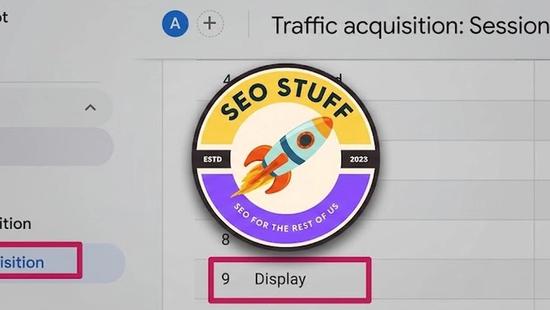
In GA4, go to Reports → Acquisition → Traffic acquisition. The default view shows all channels. Filter or sort to focus on the Display row.
Default Channel Group Dimension
In Explorations, add Session default channel group as a dimension. Filter to "Display" to see display-only sessions.
Source / Medium Breakdown
In the Traffic acquisition report, change the primary dimension to Session source / medium to see exactly which display placements drove traffic (e.g., `google / display`, `youtube.com / cpc`).
Campaign-Level View
Add Session campaign as a secondary dimension to see which specific display campaigns drove the sessions.
Conversions for Display
In Explorations, add a conversion event metric alongside Display sessions to see how display traffic converts. Note: display traffic often has lower direct conversion rates than search but contributes to upper-funnel awareness.
Display Traffic vs Other GA4 Channels
How display compares to other channel definitions.
Display vs Paid Search
Display: image/video ads on the Display Network, YouTube, Discovery, etc.
Paid Search: text ads on Google Search results pages and Search Partners.
Different intent levels — Search is high-intent (user typed a query); Display is interruption-based (user is browsing content and sees an ad).
Display vs Organic Search
Display: paid ad clicks.
Organic Search: free clicks from Google or Bing search results.
Different funding model, different intent.
Display vs Referral
Display: paid ad clicks on the Display Network.
Referral: clicks from non-search, non-social, non-paid sites that GA4 doesn't classify as another category.
Sometimes display traffic gets misattributed to Referral if UTM tags or gclid get stripped — usually a tracking gap rather than a real signal.
Display vs Direct
Display: properly attributed paid display clicks.
Direct: sessions with no detectable source.
Many would-be display sessions land in Direct if the user clicks an ad in an app context that strips the gclid.
Display vs Paid Video
Display: includes YouTube image and banner ads.
Paid Video (where present): some channel groupings separate YouTube TrueView and similar video-skip campaigns into their own channel. Default GA4 lumps YouTube display into Display.
Free SEO + AI Search Audit. Display ads put your brand in front of audiences. Knowing where your brand shows up in AI search puts that visibility in context. Get a free audit.
How to Analyze Display Traffic Performance
Practical patterns for getting useful insights.
1. Compare Engagement Rate to Other Channels
Display traffic typically has lower engagement rate than Search or Direct (because display is interruption-based). A display engagement rate below 30% is normal; below 10% suggests creative or targeting issues.
2. Look at Assisted Conversions, Not Just Last-Click
Display rarely closes the sale directly but often plays a top-funnel role. Use the Conversion paths report to see how display interacts with search, social, and email touchpoints on the way to conversion.
3. Segment by Placement
Different display placements (specific sites, YouTube vs Discovery, Performance Max vs standalone) perform very differently. Break down by source-medium-campaign to spot waste.
4. Compare to Search Lift in Display Markets
A well-run display campaign often produces a halo effect in branded search. Compare branded search query volume in test markets vs control to estimate display's true contribution.
5. Watch Bot and Invalid Traffic Patterns
Display network traffic has historically been more vulnerable to invalid traffic. Watch for unusual engagement patterns (very short durations across many sessions) that may indicate bot activity.
6. Look at View-Through Conversions Separately
GA4 doesn't natively include view-through conversions; you'd look at those in Google Ads directly. They give a fuller picture of display's contribution.
Common Issues With Display Traffic Attribution
A few patterns that trip teams up.
1. Display Traffic Showing in "Direct"
Some app environments (in-app ads, certain Android contexts) strip the gclid before the landing page loads. The session falls into Direct instead of Display.
2. Display Traffic Showing in "Unassigned"
If your default channel group has been customized in a way that doesn't match the medium values your tags use, GA4 may classify some display sessions as "Unassigned." Review the custom channel group rules.
3. Performance Max Sessions Showing Across Multiple Channels
Performance Max blends Display, Search, YouTube, Discovery, and Gmail. Sessions get attributed to whichever channel actually served the click — not always Display. This makes Performance Max harder to analyze as a single bucket.
4. UTM Inconsistency
If you tag some display campaigns with `utm_medium=display` and others with `utm_medium=banner` or `utm_medium=cpm`, GA4's default channel grouping may classify them inconsistently. Standardize on `display`.
5. Wrong Account Linked
If your GA4 property is linked to one Google Ads account but your display campaigns run in another, you won't see cost data and may see attribution gaps.
How to Improve Display Traffic Quality
If display is underperforming, here are the levers.
1. Refine Audience Targeting
Layer Custom Intent, In-Market, Affinity, and remarketing audiences. Broad GDN placements often pull low-quality traffic.
2. Use Optimized Targeting
Let Google's machine learning expand to similar users beyond your seed audience. Often outperforms manual targeting.
3. Exclude Low-Quality Placements
In Google Ads, exclude placements where engagement rate is very low or where you're seeing obvious bot patterns.
4. Use Responsive Display Ads
Let Google automatically combine your headlines, descriptions, and images. Performs better than single static creative in most accounts.
5. Set Engagement-Based Bidding
Bid for engaged sessions, conversions, or ROAS — not just clicks. Pure click bidding on display often delivers high impression volume but weak engagement.
6. Match Display Targeting to Search Audiences
Build display audiences from people who already engaged with your search ads. Tighter targeting, higher relevance.
Limitations of Display Traffic Data in GA4
A few honest caveats.
Cost data is Google-Ads-only by default. Programmatic display through DSPs (DV360, The Trade Desk) won't have cost data in GA4 unless you import it manually.
Click measurement varies by surface. YouTube engagement clicks, banner ad clicks, and Discovery clicks may be counted slightly differently in GA4 vs Google Ads.
View-through conversions aren't in GA4 reports natively. Look at Google Ads for that data.
Sampling can affect large display campaign reports. Free GA4 properties may sample large explorations, blurring placement-level patterns.
Privacy consent affects display attribution. Users who decline analytics consent are still attributed by Google Ads modeling but may not appear in your GA4 reports.
Free SEO + AI Search Audit. Display ads buy attention temporarily. AI search visibility earns it permanently. Run a free audit of how your site performs across Google AND every major AI search platform.
Display Traffic vs Other Acquisition Approaches
A quick comparison.
Display Traffic
- What it is: paid ad clicks on the Google Display Network and similar surfaces
- Best for: brand awareness, top-of-funnel reach
- Limit: lower direct conversion rates, vulnerable to invalid traffic
Paid Search Traffic
- What it is: paid text ads on Google Search and Search Partners
- Best for: high-intent, bottom-of-funnel conversions
- Limit: limited by query volume on relevant keywords
Organic Search Traffic
- What it is: free clicks from Google and Bing search results
- Best for: sustainable, high-intent traffic
- Limit: takes months to build; subject to ranking volatility
Organic Social Traffic
- What it is: free clicks from social platforms
- Best for: community-driven, awareness-stage discovery
- Limit: hard to scale predictably
AI Search Citations
- What it is: clicks from ChatGPT, Claude, Perplexity, and Gemini answers
- Best for: high-intent purchase research
- Limit: hard to measure directly in GA4 today (often shows as Direct)
Final Thoughts
Display traffic in Google Analytics is sessions from paid display ads — primarily Google Display Network, but also YouTube display, Discovery, and Performance Max display placements. GA4 identifies display traffic through Google Ads auto-tagging (`gclid`) and through UTM parameters where you've marked the campaign as display. Read it through the Traffic Acquisition report, segment by source-medium-campaign for granularity, and remember that display is usually a top-funnel channel — judge it by engagement and assisted conversions, not just last-click attribution.
Beyond paid display, the bigger 2026 question for most marketing teams is where their *organic* visibility lives. Increasingly, that's AI search engines like ChatGPT, Claude, Perplexity, and Gemini answering buyer questions and citing brands directly. While you're optimizing your display campaigns, you may be invisible in the AI answers shaping more and more buying decisions. Run a free audit to see exactly where your site performs across Google AND every major AI search platform — and which fixes will move your traffic the fastest this quarter.