What Does GA Stand For? (Plus What It Means in 2026)
 Carlos Garcia5/20/2026
If you've seen "GA" mentioned in marketing meetings, on dashboards, or in tutorials and weren't sure exactly what it referred to, you're not alone — "GA" is one of the most overloaded acronyms in tech, with at least five common meanings depending on context. In the analytics and marketing world specifically, "GA" almost always means Google Analytics. This article covers every common meaning of GA, why context matters, and what the current Google Analytics (GA4) actually is in 2026.
Free SEO + AI Search Audit. GA tells you what's happening with your existing traffic. But how visible is your business across Google AND in AI search platforms like ChatGPT, Claude, Perplexity, and Gemini? Run your free audit → to see exactly where your site stands across every major platform in 60 seconds.
What Does GA Stand For? (Quick Answer)
In simple terms, "GA" most commonly stands for one of these five things, depending on the context:
- Google Analytics — the most common meaning in marketing, SEO, and web analytics contexts
- General Availability — in software/SaaS contexts, meaning a product is publicly released
- Genetic Algorithm — in computer science / machine learning contexts
- Georgia — the US state, in geographic / business contexts
- Generally Accepted — in accounting (e.g., GAAP — Generally Accepted Accounting Principles)
For 90%+ of business and marketing conversations, GA = Google Analytics. The other meanings show up in their own specific contexts.
GA = Google Analytics (Most Common Meaning)
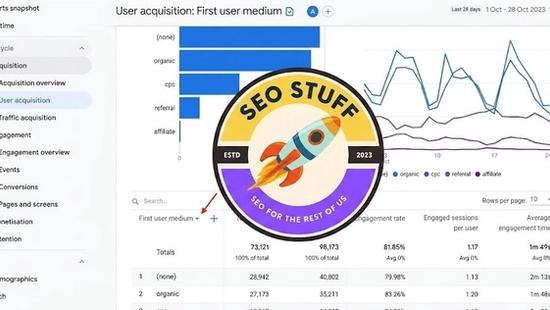
Google Analytics is Google's free web analytics platform, used by millions of websites to measure traffic, user behavior, conversions, and marketing performance.
The current version, Google Analytics 4 (GA4), replaced the older Universal Analytics (UA) on July 1, 2023. By 2026, every active GA property uses GA4 — Universal Analytics is fully deprecated and historical UA data is no longer accessible through the standard interface.
In modern usage:
- "Set up GA on the new site" = install Google Analytics tracking
- "Pull the GA numbers for last month" = export Google Analytics traffic data
- "GA conversions are down" = conversion events tracked in Google Analytics are down
- "Connect GA to Search Console" = link the Google Analytics property to a Search Console property
When someone in marketing, SEO, content, or product says "GA," they mean Google Analytics unless context strongly suggests otherwise.
GA = General Availability (Software Context)
In software product launches, "GA" means General Availability — the official public release of a product. A typical SaaS product launch progression:
- Alpha — internal testing only
- Closed beta — invite-only external testers
- Public beta — anyone can sign up, but the product is still being refined
- GA (General Availability) — fully released, production-ready, generally supported
"Feature X is GA next month" means the feature is becoming publicly available. "We're not GA yet" means a product is still in beta or limited release.
Free SEO + AI Search Audit. Software products use "GA" to mean they're publicly available. The question for your business: are you publicly visible in the places buyers are actually looking — including AI search? Run a free audit of how your site performs across Google AND every major AI search platform.
GA = Genetic Algorithm (Computer Science)
In machine learning, optimization, and computer science contexts, "GA" can mean Genetic Algorithm — a class of optimization algorithms inspired by biological evolution. Genetic algorithms iteratively evolve solutions to problems through selection, crossover, and mutation operations.
You'd see "GA" used this way in academic papers, AI research, scheduling and optimization software, and engineering applications. Not common in business or marketing conversations.
GA = Georgia (Geographic Context)
In geographic, business address, or shipping contexts, "GA" is the US Postal Service abbreviation for the state of Georgia. Atlanta is the capital. Companies based in or shipping to Georgia would use "GA" as the state code.
This usage is unambiguous in addresses and geographic contexts but can confuse with the analytics meaning in mixed contexts (e.g., "GA office" might mean Georgia office or Google Analytics team, depending).
GA in GAAP = Generally Accepted (Accounting Context)
In accounting, "GA" appears in GAAP — Generally Accepted Accounting Principles, the standard accounting framework in the United States. GAAP is maintained by the Financial Accounting Standards Board (FASB) and is required for publicly traded US companies.
You'd hear this in finance, audit, and accounting contexts. Outside accounting, this meaning rarely comes up.
Why Context Matters
When someone says "GA," figuring out which meaning is intended takes 1-2 seconds based on context:
- Marketing meeting: Almost certainly Google Analytics.
- Software product announcement: General Availability.
- Academic / AI conversation: Genetic Algorithm.
- Shipping address or business location: Georgia.
- Accounting / finance: GAAP context, Generally Accepted.
When in doubt, ask. Marketing-vs-software-product confusion is the most common mix-up because both terms are used heavily in business contexts.
What Google Analytics Actually Does (Modern GA4)
Since "GA = Google Analytics" is the most relevant meaning for most readers, here's a quick rundown of what GA4 actually does in 2026:
Traffic Measurement
GA4 tracks visits to your website: where they came from (search, social, direct, referrals), what they did (pages viewed, time on site, scroll depth), and whether they converted (purchases, signups, form submits).
Event-Based Tracking
Unlike Universal Analytics, GA4 is event-based. Every interaction — page view, click, scroll, video play, file download — is an event with parameters. This makes GA4 more flexible than UA but also more complex.
Cross-Device and Cross-Platform Tracking
GA4 unifies measurement across web, iOS, and Android. The same user moving from your website to your mobile app is tracked as one user (with proper setup).
Conversion Reporting
Mark specific events as conversions to tie traffic to outcomes. Connect GA4 to Google Ads to optimize campaigns based on conversion data.
Integration with the Google Stack
GA4 integrates natively with Search Console, Google Ads, BigQuery, and Looker Studio. Connect once, and data flows into the broader Google analytics ecosystem.
Privacy and Consent
GA4 supports consent mode for GDPR / privacy compliance. Users who decline tracking are still measured anonymously without personal data.
Free SEO + AI Search Audit. GA4 shows you what your existing visitors are doing. It can't show you whether you're invisible in AI search. Get a free audit of how your site performs across every major search and AI platform.
Why People Confuse GA Meanings
A few reasons "GA" gets confusing:
1. Marketing and Software Worlds Overlap
If you're in a SaaS company, both "Google Analytics" and "General Availability" come up regularly. "GA dashboards" usually means Google Analytics. "Going GA" usually means launching a product.
2. Tools Use the Same Acronym
Adobe Analytics is sometimes called "AA," not "GA," but the parallels can cause confusion when discussing analytics generally.
3. New Versions Add Complexity
Universal Analytics (UA) vs Google Analytics 4 (GA4) created its own confusion during the transition period. By 2026, just "GA" or "GA4" is the standard usage.
When to Use "GA" vs "Google Analytics" in Writing
A small style note for marketing and content work:
Use "GA" When...
You're writing internally for teams already familiar with the acronym. Space is tight (dashboards, slide titles). Repeating "Google Analytics" repeatedly would be awkward.
Use "Google Analytics" When...
You're writing public-facing content (blog posts, marketing pages, documentation) where readers might not know the acronym. SEO-wise, the full term ranks for more keyword variations.
Best Practice for Writing
Spell out "Google Analytics" on first mention, then use "GA" for subsequent references. This satisfies both clarity (for newcomers) and brevity (for skimmers).
Limitations and Common Misunderstandings
"GA" alone doesn't tell you what version. Google Analytics 4 (GA4) is current; Universal Analytics (UA) is deprecated. Always specify if version matters.
GA is web/app analytics, not search analytics. For organic keyword data and search performance, you need Google Search Console — not GA alone. GA measures traffic AFTER it arrives; Search Console measures search performance BEFORE.
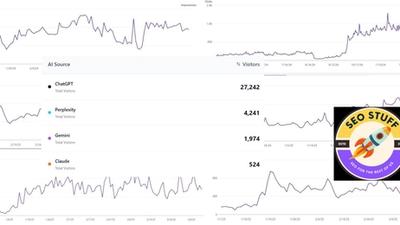
GA has no visibility into AI search. Queries from ChatGPT, Perplexity, Claude, and Gemini don't show up as recognizable sources in GA. This is a growing measurement gap.
Free GA has data sampling limits. Custom reports on high-traffic properties may show sampled data. For full data, GA4 360 (paid) or BigQuery export is required.
Final Thoughts
In 99% of marketing and business contexts in 2026, "GA" means Google Analytics — specifically Google Analytics 4. The other meanings (General Availability, Genetic Algorithm, Georgia, Generally Accepted) come up in their own specific contexts but rarely cause confusion if you pay attention to who's talking and what they're talking about.
That said, GA only measures one slice of your digital presence — what's happening on your own website. In 2026, an increasing share of buyer research is happening on ChatGPT, Claude, Perplexity, and Gemini, and GA can't show you whether your brand is appearing there. Run a free audit to see exactly where your site stands across Google AND every major AI search platform — and which fixes will move your traffic the fastest this quarter.