
What Reddit's Perplexity Lawsuit Reveals About How AI Search Actually Works
 Alex Groberman5/20/2026
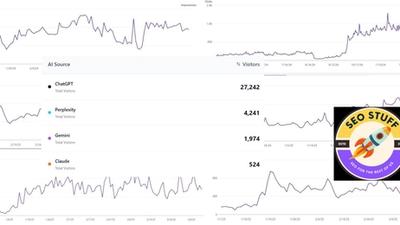
Reddit sued Perplexity and a group of major scraping providers including SerpApi, Oxylabs and AWMProxy. In the process, they revealed how Perplexity, ChatGPT and Google actually work. The lawsuit also reveals how SEO Stuff has been getting traffic and sales for customers from Google, ChatGPT and Perplexity. Now that the secret is out, let's talk about it.
Free SEO + AI Search Audit. Now that the lawsuit has surfaced how AI search engines actually pick what to cite, the question is whether your site is built for the way Perplexity and ChatGPT really retrieve content. Run your free audit → to see exactly where you stand in 60 seconds.
What the Lawsuit Actually Reveals
Reddit's lawsuit claims that Perplexity and its partners have been scraping Google's search results to capture Reddit content indirectly, bypassing robots.txt restrictions. One part of the complaint really stuck out.
Reddit reportedly created a test post that only Google could crawl. Within hours, Perplexity showed the content of that post. According to Reddit, the only way Perplexity could have retrieved that content was by scraping Google's SERPs or by getting the data from a partner that scraped it.
This tells us something important. Perplexity and similar AI search engines are not crawling the full internet on their own. They are relying heavily on Google's top results, authority domains, recency signals, and structured content.
This lines up cleanly with what Perplexity's head of comms recently explained publicly. Many AI search systems still rely on page-level discovery signals before passing those results into an LLM, which then synthesizes answers using sub-document or snippet-level context. AI engines don't start from "the web." They start from a filtered, ranked, authority-weighted version of the web.
How AI Search Engines Actually Work
When you break it down, here is what appears to be happening under the hood:
1. Google Is the Discovery Feed
Perplexity monitors and ingests Google's top results as a discovery feed. This is why visibility in Google translates directly into visibility in AI search. This also explains why brands that "rank fine" but lack authority or structure often never show up in AI answers. They're visible to humans, but not that useful to machines.
2. Content Gets Chunked into Vector Embeddings
Perplexity offered a window into AI search dating back to last August when their "ranking factors" leaked. Retrieved content is broken into chunks and converted into vector embeddings. At search time, the system compares your content's vectors against the user's query to find semantically relevant matches. Clean structure, clear subheadings, short answer blocks and semantic clarity win out. This is exactly what snippet-first systems optimize for: reusable fragments.
3. Authority Domains Get a Boost
Authority domains receive a ranking boost, and legitimate, strong backlinks still matter. Recent studies on AI Overviews and Common Crawl back this up: authority builds on itself inside AI systems because high-authority domains are crawled more often, retrieved more often and cited more often.
4. A Strict Recency Filter Is Applied
Perplexity uses a time decay system. New content and recently updated content are weighted more heavily. Stale content drops out of the consideration set quickly, which is why one-time content investments rarely sustain AI citations on their own.
Free SEO + AI Search Audit. You can read about how AI search engines pick winners, or you can find out exactly where your site stands across Google, ChatGPT, Claude, Perplexity and Gemini. Run a free audit in 60 seconds.
How SEO Stuff Solves This
Everything the lawsuit revealed lines up perfectly with the system we have been building long before the case surfaced — not because anyone was exploiting a one-off loophole, but because we were building for how AI systems actually retrieve, chunk and cite information. Three services do the heavy lifting:
- Gold Plan: 10 AI-search-optimized articles plus three DR50+ backlinks per cycle. Content is formatted with high semantic density, clear HTML markup, TLDR summaries, question-based H2s, and short answer blocks for extraction. Backlinks come from domains already appearing in AI results.
- Premium Content Bundle: 60 targeted, high-similarity articles created and refreshed on rolling cycles to stay inside the visibility window that Perplexity, Gemini and AI Overviews rely on. Designed to show up in both Google's index and Perplexity's derivative index.
- Premium Backlink Bundle: three DR50+ contextual backlinks from domains already being cited by AI answer engines. This reinforces authority and entity alignment so your site is more likely to be selected by ChatGPT and Perplexity.
Scale matters because AI confidence is built through repetition, not one perfect page. The combination builds both discovery authority (Google) and citation defensibility (AI).
Free SEO + AI Search Audit. Before you commit to any service — ours or anyone else's — see where your site actually stands today. Get a free audit across Google AND every major AI search platform.
The Takeaway
If you take away one thing today, it should be this: Perplexity and ChatGPT are not indexing the entire internet. They are indexing Google's version of the internet, filtered through authority, structure and freshness.
This is why SEO Stuff customers who publish structured factual content, update their content regularly, build DR50+ backlinks, and keep tight semantic alignment with their category are the ones earning citations, visibility and direct conversions from AI search. If you want to show up in ChatGPT, Perplexity or Gemini, you have to build for Google and for AI ingestion at the same time. That has been the SEO Stuff playbook from day one. The Reddit lawsuit just confirmed it publicly.
Free SEO + AI Search Audit. The Reddit lawsuit just confirmed publicly what we have been building for since day one. Run your free audit to see exactly where your site stands across Google AND every major AI search platform — and which fixes will move your traffic the fastest this quarter.