Looker Studio vs Looker: What's the Difference? (2026 Guide)
 Carlos Garcia5/14/2026
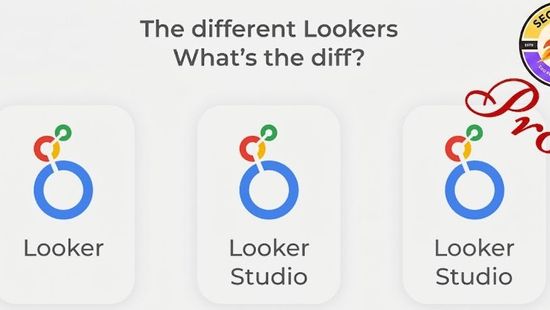
If you've spent any time researching Google's data and analytics tools, you've almost certainly run into both "Looker" and "Looker Studio" — and probably wondered whether they're the same product, two versions of the same thing, or completely separate tools. The short answer: they're separate products with very different purposes, prices, and audiences. The long answer is what this article is for. We'll cover what each tool is, who it's for, what it costs, and exactly how to decide which one your team should use in 2026.
Free SEO + AI Search Audit. Picking the right analytics tool is one decision. Knowing whether anyone can actually find your site in the first place — in Google AND in ChatGPT, Claude, Perplexity, and Gemini — is the bigger one most teams overlook. Run your free audit → to see exactly where your site stands across every major search and AI platform in 60 seconds.
What Is Looker Studio?
In simple terms, Looker Studio is Google's free, browser-based dashboard and visualization tool. It used to be called Google Data Studio (rebranded in October 2022), and most people who've been using it for a few years still call it that. Looker Studio lets you connect to data sources — Google Analytics, Google Ads, Google Sheets, BigQuery, hundreds of third-party connectors — and build interactive reports and dashboards that you can share with a link, just like a Google Doc.
Think of Looker Studio as the spreadsheet-graduate's reporting tool. If you can build a chart in Google Sheets, you can build a Looker Studio dashboard. It's drag-and-drop, with templates for the most common report types (web analytics, ad performance, SEO, e-commerce), and it doesn't require any coding or modeling work to get started.
Looker Studio is free for individuals and small teams. There's a paid "Looker Studio Pro" tier that adds team-level governance, scheduled email delivery of reports, and tighter integration with Google Cloud — but the core product is genuinely free and used by millions of marketers, analysts, and small business owners worldwide.
What Is Looker (the Original)?
Looker — the one without "Studio" in the name — is a completely different product. It's Google's enterprise data platform for modeling, querying, and embedding analytics into business applications. Google acquired Looker in 2020 for $2.6 billion, and unlike Looker Studio, the original Looker is paid, enterprise-grade, and requires significant setup before anyone can build a chart.
The core concept that defines Looker (and separates it from Looker Studio) is LookML — Looker's proprietary modeling language. Data engineers write LookML to define what's in your data warehouse, how the tables relate, what dimensions and measures mean, and how to compute them. Business users then explore the modeled data using "Explores" — guided, governed views of the data. The result is a single source of truth where every team queries the same definitions of "revenue," "active user," or "conversion."
Looker is built for organizations that have a real data warehouse (BigQuery, Snowflake, Redshift, Databricks) and need governed analytics for hundreds or thousands of users. Pricing isn't publicly listed — it's negotiated based on user count, data volume, and embedded use cases, but it typically starts in the tens of thousands of dollars annually.
Looker Studio vs Looker: Side-by-Side Comparison
Now that you know what each one is, here's how they actually compare across the dimensions that matter most.
Cost
- Looker Studio: Free for the core product. Pro tier adds team features and runs around $9/user/month.
- Looker: Enterprise pricing, typically negotiated. Starts in the $30,000–$60,000/year range and scales up significantly for larger orgs.
Setup Effort
- Looker Studio: Connect a data source, pick a template, you're live in 10 minutes. No coding required.
- Looker: Requires data engineering to write LookML models. Implementation projects typically take weeks to months before end users get real value.
Best For
- Looker Studio: Marketing teams, agencies, small businesses, anyone who needs to build dashboards from Google Analytics, ads platforms, or spreadsheets.
- Looker: Mid-market and enterprise organizations with a data warehouse, multiple analytics teams, and a need for governed, consistent metrics across hundreds of users.
Data Modeling
- Looker Studio: Minimal. You can do basic calculated fields and blends, but there's no formal modeling layer.
- Looker: LookML is the entire point. It's a full semantic modeling language for defining metrics, dimensions, joins, and access controls in code.
Governance and Permissions
- Looker Studio: Document-level sharing, similar to Google Docs. Pro tier adds team workspaces.
- Looker: Granular permissions on data, models, dashboards, and explores. Row-level security. Built for organizations that need to control which users see which data.
Free SEO + AI Search Audit. Choosing analytics tools is just one piece of building a measurable marketing operation. The other piece is making sure people can actually find your site when they're searching. Run a free audit to see how your website performs in Google and in ChatGPT, Claude, Perplexity, and Gemini — the four AI platforms now driving more search traffic every month.
When Should You Use Looker Studio?
Looker Studio is the right choice in most situations short of true enterprise scale. Specifically:
1. Marketing and Ad Performance Dashboards
If you're pulling data from Google Analytics, Google Ads, Facebook Ads, LinkedIn Ads, Search Console, or any combination of those, Looker Studio is built for you. Free, native or near-native connectors for all of them, plus templates that turn a connection into a polished dashboard in minutes.
2. Agency Reporting for Clients
Agencies use Looker Studio constantly. You connect your client's accounts, build a branded dashboard, and share the URL. Clients get a live view of their metrics with no logins to remember. You save hours every month not exporting screenshots into PowerPoint.
3. Small Business and Personal Use
For a small business owner trying to understand site traffic, ad spend, or e-commerce performance, Looker Studio is the obvious choice. It's free, it's fast, and the learning curve is gentle.
4. Quick One-Off Visualizations
When you have a spreadsheet or a quick BigQuery query and you just need a chart you can share with the team, Looker Studio is faster than firing up Tableau, Power BI, or anything else.
When Should You Use Looker (the Original)?
Looker makes sense when you have specific enterprise needs that Looker Studio can't meet:
1. Data Warehouse with Many Sources Joined Together
If your data lives in BigQuery, Snowflake, Redshift, or Databricks, and the most important reports require joining 10+ tables with complex business logic, Looker's LookML modeling is built exactly for that.
2. Hundreds or Thousands of Internal Users
When the same definition of "revenue" or "active user" needs to apply across teams, Looker's modeling layer enforces consistency in a way that ad-hoc dashboards can't.
3. Embedded Analytics in Your Own Product
Looker is the leading tool for white-labeled analytics inside SaaS products. If your customers need to see their own data inside your app, Looker has the embed and SDK story Looker Studio doesn't.
Free SEO + AI Search Audit. Whether you're using free tools or enterprise platforms to track your data, none of it matters if your site isn't visible to the people searching for what you sell. Get a free audit of exactly how your website performs in Google AND in every AI search platform — Claude, ChatGPT, Perplexity, and Gemini.
4. Strict Data Governance Requirements
In regulated industries (finance, healthcare, insurance), the audit trail, access controls, and version-controlled modeling that Looker provides aren't optional. Looker Studio doesn't try to compete here.
Can They Work Together?
Yes, and Google increasingly positions them as complementary. The pattern that works for many organizations: Looker handles the modeling layer and serves as the source of truth for enterprise metrics, while Looker Studio is used for executive-friendly dashboards and external reporting that pull from Looker-modeled data. Looker Studio Pro has tighter integration with Looker semantic models than the free version.
But for most teams, you only need one. Pick Looker Studio unless you have a clear, specific need for what Looker provides.
Limitations to Know About
Looker Studio's free tier has data source limits. Some connectors (especially third-party paid ones from Supermetrics, Power My Analytics, etc.) cost money to use even though the platform itself is free.
Looker Studio reports can be slow with large datasets. It's not optimized for BigQuery tables with hundreds of millions of rows. Looker handles that scale far better.
Looker has a steep learning curve. LookML is a real language, and learning it takes weeks. If your team can't dedicate a data engineer to it, Looker may not be the right fit even if your org could otherwise afford it.
Both tools have a complicated history. Google's rebrand from Data Studio to Looker Studio caused confusion that still persists. Many tutorials, templates, and Stack Overflow answers still reference "Data Studio" but apply to Looker Studio — same product.
Migration between them isn't automatic. Reports built in Looker Studio don't port over to Looker. If you outgrow Looker Studio, expect to rebuild your dashboards from scratch in Looker.
Final Thoughts
The short version: Looker Studio is for everyone, Looker is for enterprises. If you're a marketer, agency, small business, or analyst looking to build dashboards from Google products, spreadsheets, or common ad platforms, Looker Studio is almost certainly what you want — and it's free. If you're a mid-market or enterprise data team that needs a governed modeling layer over a warehouse with hundreds of business users, Looker is the answer.
Either way, the dashboard isn't the bottleneck for most marketers in 2026 — visibility is. Your reports can be beautiful, but if your site isn't showing up in Google and AI search engines like ChatGPT, Claude, and Perplexity, there's nothing to report on. Run a free audit to see exactly how your website performs across Google AND every major AI search platform — and which fixes will move your traffic the fastest this quarter.