How to Turn On Analytics Feature on TikTok (2026 Guide)
 Carlos Garcia5/25/2026
If you've been posting on TikTok and wondering why you can't see view counts beyond the basic likes-and-comments view — and you've searched for "TikTok analytics" only to find scattered guides that refer to old menu locations — you're not alone. To turn on the analytics feature on TikTok in 2026, you need to switch your account from Personal to either a Business or Creator account (Settings and privacy → Account → Switch to Business Account or Switch to Creator Account); once switched, the Analytics dashboard appears under Settings → Creator tools → Analytics on mobile, and at business.tiktok.com on desktop — it's free, includes the last 7/28/60 days of data by default, and unlocks overview, content, follower, LIVE, and shopping metrics. This guide walks through exactly how to enable TikTok analytics, where to find each report, what each metric means, and the differences between Creator and Business account analytics in 2026.
Free SEO + AI Search Audit. TikTok analytics show you what happens on TikTok. A free SEO + AI search audit shows whether your brand surfaces on the open web — across Google AND inside AI search engines like ChatGPT, Claude, Perplexity, and Gemini. Run your free audit →
How to Turn On TikTok Analytics: The Direct Answer
In simple terms, TikTok analytics aren't a feature you "turn on" — they're a feature that becomes available when you switch your account from Personal to Business or Creator. Personal accounts don't have access to the full analytics dashboard.
The full process:
- Open the TikTok app
- Go to your profile (bottom right)
- Tap the three-line menu (top right)
- Tap Settings and privacy
- Tap Account
- Tap Switch to Business Account (or Creator Account)
- Pick a category and confirm
- Return to profile → menu → Creator tools → Analytics
Once switched, analytics start populating immediately, and you'll see historical metrics for any data TikTok already has on your videos.
What's the Difference Between Business and Creator Accounts?
A quick comparison.
Creator Account
- For individual creators, influencers, and personalities
- Access to Creator Tools, including Analytics, Promote (paid boosts), Creator Marketplace (brand deals)
- Eligibility for monetization features (Creator Fund, Creativity Program, Pulse, gifts on LIVE)
- Limited commercial sound library (full library available)
Business Account
- For brands, businesses, and organizations
- Access to Business Tools, including Analytics, Ads Manager, Business Suite, Lead Generation
- Limited to commercial sound library only (no copyrighted music)
- No access to Creator Fund or some creator-only monetization features
- Full access to TikTok Ads Manager for paid campaigns
Which Should You Pick?
- Brand or business: Business Account
- Personal creator or influencer: Creator Account
- Mixed (both content creator + business): Creator Account is more flexible for content; switch to Business when launching ads
You can switch between account types — but most monetization eligibility resets when you switch, so pick carefully.
Step-By-Step: Switch Your Account in the TikTok App
The full mobile flow.
Step 1: Open Your Profile
Tap the profile icon at the bottom-right of the home screen.
Step 2: Open Settings
Tap the three-line menu icon (top-right corner) → Settings and privacy.
Step 3: Tap Account
Under the "Account" section.
Step 4: Switch Account Type
Tap Switch to Business Account or Switch to Creator Account. Both options appear if you're on a Personal account.
Step 5: Pick a Category
For Business: choose from categories like Beauty, Education, Food & Beverage, Retail, etc. This affects which insights TikTok surfaces.
For Creator: pick a category like Entertainment, Education, Beauty, Fitness, etc.
Step 6: Confirm
Confirm the switch. No charge — both types are free.
Step 7: Verify the Switch
Return to your profile. You should see a small "Business" or "Creator" tag near your username. Open the three-line menu — you'll now see Creator tools or Business Suite as a top-level option.
How to Find the Analytics Dashboard on Mobile
The exact navigation path.
Step 1: Open Your Profile
Tap the profile icon at the bottom-right.
Step 2: Open the Menu
Tap the three-line menu (top-right).
Step 3: Tap "Creator tools" or "Business Suite"
Depending on your account type.
Step 4: Tap "Analytics"
The dashboard opens.
Step 5: Pick a Time Range
7, 28, 60 days, or custom. The default is the last 28 days for most reports.
Step 6: Explore Tabs
Standard tabs:
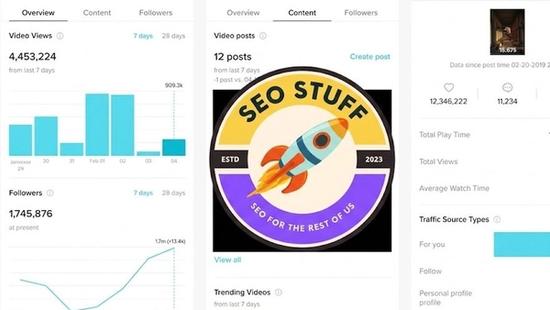
- Overview: video views, profile views, likes, comments, shares for the period
- Content: per-video performance
- Followers: growth, demographics, peak activity times
- LIVE: LIVE stream metrics (if you've gone live)
- Shopping (if applicable): TikTok Shop performance
How to Find the Analytics Dashboard on Desktop
For deeper analysis.
Step 1: Go to business.tiktok.com
Sign in with your TikTok account. Available for both Business and Creator accounts (the desktop interface is shared).
Step 2: Navigate to Analytics
In the left sidebar, click Analytics.
Step 3: Explore the Reports
Desktop analytics include richer time-series charts, exportable CSV data, and longer history than the mobile view.
Step 4: Export Data
CSV exports available for video performance, follower demographics, and engagement metrics. Useful for pulling into Google Sheets, Excel, or BI tools.
What Each TikTok Analytics Tab Shows
A quick guide.
Overview Tab
The high-level dashboard:
- Video Views: total views across all your videos in the selected period
- Profile Views: how many people opened your profile
- Likes: total likes received
- Comments: total comments
- Shares: total shares
- Followers: net new followers (or net change)
Content Tab
Per-video performance:
- Total play time
- Average watch time
- Watch time at 25%, 50%, 75%, 100% retention
- Total plays
- Average viewer duration
- Traffic source breakdown (For You, Following, Search, Profile, etc.)
Followers Tab
Audience insights:
- Total followers and growth rate
- Gender breakdown (male/female/other)
- Age ranges
- Top countries and cities
- Most active hours of day (when followers are online)
- Most active days of week
LIVE Tab
For live streams:
- Total LIVE views
- Unique viewers
- Average watch time
- New followers gained from LIVE
- Diamonds (gift earnings)
- Top LIVE viewers (by gifting)
Shopping Tab (if TikTok Shop is set up)
Commerce metrics:
- Product views
- Add to cart events
- Orders placed
- GMV (gross merchandise value)
- Top-performing products
Free SEO + AI Search Audit. TikTok analytics show you what happens on TikTok. AI search audits show whether your off-TikTok brand presence is showing up where buyers research. A free SEO + AI audit covers it. Get a free audit.
How to Read TikTok Analytics Effectively
Practical patterns.
1. Watch Average Watch Time, Not Just Views
A video with 10K views and 6 seconds average watch time is worse than a 2K video with 22 seconds average watch time. TikTok's algorithm rewards watch time, not raw views.
2. Compare to Your Personal Baseline
Don't compare to other creators. Compare each video to your last 10 videos' average. That's the metric TikTok's algorithm cares about.
3. Look at Traffic Source Breakdown
Videos that go viral usually have 80%+ of plays coming from For You. Videos with high % from Following are reaching your existing audience but not breaking out.
4. Watch the 25% Retention Hook Rate
If retention drops sharply between 0% and 25%, your hook isn't working. The first 3 seconds are the most important.
5. Track Follower Active Hours
Post at peak follower activity times (visible in the Followers tab) for highest organic reach.
6. Compare 7-Day vs 28-Day Trends
If 7-day numbers are sharply different from 28-day, that's signal — either a viral moment or a recent issue.
Free SEO + AI Search Audit. TikTok's native analytics cover what happens inside TikTok. A free SEO + AI audit covers what happens everywhere else. Get yours →
Common Mistakes Turning On TikTok Analytics
Pitfalls to avoid.
1. Switching to Business When You Should Have Picked Creator
Business accounts can't use copyrighted commercial sounds. If you rely on trending songs, this kills your reach. Pick Creator if music matters.
2. Picking the Wrong Category
Some category-specific insights only surface if your category is correctly set. Audit your category and switch if needed.
3. Expecting Retroactive Analytics
Once you switch, you'll see analytics for videos posted before the switch (TikTok backfills these). But some advanced metrics only populate from the switch date forward.
4. Confusing the Mobile and Desktop Views
The mobile and desktop dashboards show slightly different metrics. For exports, use desktop. For quick checks, mobile is fine.
5. Looking at Wrong Time Periods
Default time periods often hide trends. Always pick a comparable window (e.g., last 28 days vs prior 28 days, not last 7 vs prior 28).
6. Ignoring Demographics for Niche Audiences
If your content targets a specific demographic (e.g., 18-24 women in the US), watch whether your follower base actually skews that way. Mismatch indicates content-targeting drift.
Limitations of TikTok Analytics
A few honest caveats.
Data lag. Some metrics (especially watch time and demographics) update with a 24-48 hour delay.
Historical data is capped. TikTok caps how far back you can pull data — usually 60 days in mobile, longer on desktop. Export regularly if you need long-term history.
Limited cross-video aggregation. TikTok's native analytics don't easily combine metrics across all your videos. Third-party tools (TikTok Studio, Sprout, Iconosquare) fill this gap.
No real-time data. Unlike YouTube, TikTok doesn't show real-time view counts on most metrics.
Search and Profile traffic source is broad. "Search" and "Profile" lumps together TikTok-native search, hashtag search, and direct profile visits — you can't break these out.
Some metrics require ads spend. Reach efficiency and impression-based metrics are richer in TikTok Ads Manager (only available to Business accounts running ads).
How to Get More From TikTok Analytics
Beyond the built-in dashboard.
1. Set Up TikTok Pixel for Website Conversion Tracking
If you're driving traffic to a website, install the TikTok Pixel to track website conversions attributed to TikTok visits.
2. Connect TikTok Shop for Commerce Insights
If you sell physical products, TikTok Shop adds a Shopping analytics layer.
3. Use a Third-Party Analytics Tool
Tools like TikTok Studio, Iconosquare, Sprout Social, and Brand24 aggregate TikTok data with other social platforms.
4. Cross-Reference With GA4
For traffic landing on your site from TikTok, GA4 attribution may differ from TikTok's reported clicks. Cross-reference both.
5. Track Performance Across Posting Patterns
Build a spreadsheet logging post timing, topic, hashtag mix, and resulting metrics. Patterns become obvious after 30-50 data points.
6. Watch the Creator Marketplace If You're Open to Brand Deals
The Creator Marketplace (for Creator accounts) shows your performance metrics to potential brand partners — make sure they tell a strong story.
Free SEO + AI Search Audit. TikTok's algorithm decides who sees your content there. AI search algorithms decide who sees your brand on the open web. A free SEO + AI audit checks the second one. Run yours →
Final Thoughts
To turn on the analytics feature on TikTok in 2026, you don't toggle a switch — you change your account type from Personal to Business or Creator (free, instant, reversible). Once switched, the Analytics dashboard appears under Settings → Creator tools → Analytics on mobile and at business.tiktok.com on desktop, with overview, content, followers, LIVE, and (if applicable) shopping reports. Business accounts get TikTok Ads Manager access but lose commercial sound library access; Creator accounts keep full sound access and Creator Fund eligibility but have fewer ads tools. To get the most out of TikTok analytics, focus on average watch time over raw views, compare each video to your own baseline (not other creators), and post at your audience's peak active hours from the Followers tab.
Beyond TikTok itself, the bigger 2026 question for most brands is whether your audience can find you when they leave TikTok — when they search Google, ask ChatGPT, or query Perplexity for the product or service they discovered on TikTok. Increasingly, that off-platform discovery happens inside AI search engines like ChatGPT, Claude, Perplexity, and Gemini. Run a free audit to see exactly where your site performs across Google AND every major AI search platform — and which fixes will move the needle fastest this quarter.
Want this done for you?
SEO Stuff gets businesses cited by ChatGPT, Gemini, Perplexity and Claude, and ranking in Google. Start with the free audit, a call, or the package.
See where you stand
A free, manual SEO + AI search audit of your site, with a report within 48 hours. No credit card, no sales call.
Get the free auditTalk it through
A free 20-minute call with the founder about whether AI search is a meaningful opportunity for your business.
Book a callHave it done
The Done-For-You Package: audit, 10 pages of content, 3 DR50+ placements, dashboard. $999 once, delivered in 21 business days.
See the package