How to Delete Facebook Page From Meta Business Suite (2026 Guide)
 Carlos Garcia5/14/2026
If you've ever inherited an old Facebook business page from a former job, launched a brand that quietly died, or spun up a duplicate page during a rebrand, you've probably wondered how to clean it up — and run straight into Meta's confusing maze of admin tools. The process for deleting a Facebook business page from Meta Business Suite isn't hard once you know where to click, but Meta keeps moving things around. In this guide we'll walk through what deleting actually means, why pages are surprisingly hard to remove, the exact step-by-step in Meta Business Suite (and the alternative if you're on Facebook directly), when to delete vs deactivate, and what to do before you hit the button. By the end you'll have a clean digital footprint.
Free SEO + AI Search Audit. Cleaning up zombie Facebook pages is one kind of housekeeping. Cleaning up how your business appears in Google and AI answer engines is another. Our free audit takes about two minutes and shows you which pages are pulling search traffic and which are working against you. Run your free audit →
How to delete a Facebook business page from Meta Business Suite
In simple terms, deleting a Facebook business page means scheduling its permanent removal from Meta's platform — followers, posts, photos, reviews, and admins all disappear after a 30-day grace period. Meta uses this grace period to give you time to undo the action if you change your mind.
In Meta Business Suite, the option lives under the page's settings rather than at the top level of the dashboard. You'll switch to the page you want to delete, open its settings, find the Privacy or Page management section, and choose to deactivate or delete the page. The deactivation step is reversible; the deletion step is permanent after the 30 days expire.
It's worth knowing that Meta treats deletion as a final action, not a casual cleanup. Once 30 days pass, you cannot recover the page or any associated content, and the page's username (the @handle) becomes available for someone else to claim — which matters if your business has any chance of returning to that name.
Pages tied to advertising accounts, Business Manager assets, or Instagram accounts add a layer of complexity. You'll typically need to disconnect or reassign those before Meta will let the deletion go through, which we'll cover in the limitations section.
Why deleting a Facebook page is harder than it looks
There are a few reasons Meta makes you jump through hoops to remove a page, and most of them protect you from accidental loss.
Pages are business assets, not just profiles
A Facebook page is more than a profile — it's often tied to ad accounts, a Business Manager, an Instagram account, pixel-tracking events, product catalogs, and lead forms. Meta treats it as an asset that may have downstream financial impact, so the deletion flow checks for connected resources and warns you about what will be lost.
This is also why pages owned by a Business Manager have a slightly different flow than personal pages — Meta wants the page's role within the business hierarchy to be cleaned up before the page itself disappears.
Mistakes are common, so Meta builds in safety nets
Page admins routinely confuse deactivation with deletion, mix up which page they're currently viewing in a multi-page account, or hit "delete" while trying to remove a single post. The 30-day grace period, repeated confirmation prompts, and the requirement to re-enter your password are all there to prevent the most common irreversible mistakes.
If you've ever accidentally clicked something in the heat of a rebrand week, you'll appreciate that Meta is willing to be a little annoying here.
Free SEO + AI Search Audit. Once your social footprint is tidy, the next question is your search footprint. Run our free audit to see which pages on your website are actually pulling organic traffic and which AI answer engines are citing your brand — useful before you decide which presences to consolidate. Run your free audit →
Key things to do before you delete
Take care of these items first to avoid losing data or breaking integrations.
Download your content
Facebook lets you download a full archive of the page — posts, photos, videos, messages, follower lists, and analytics — before deletion.
- Page exports: go to Page settings → General → Download Page Information. Choose the date range and the data categories you want.
- Insights download: export historical performance data via Meta Business Suite → Insights → Export. Useful if you're rebuilding under a new page.
- Media files: high-resolution photos and videos aren't always preserved on local devices once cloud sync expires — pull them now.
- Customer messages: if the page handled customer support, export the inbox so you keep a record of conversations.
Reassign or detach connected assets
Pages rarely live in isolation. Walk through these connections so you don't break things.
- Ad accounts: move any active or historical ad accounts off the page, or pause campaigns and ensure billing is settled.
- Instagram link: unlink the connected Instagram business profile if you want to keep posting from Instagram without disruption.
- Pixel and Conversions API: remove the pixel from your website or reroute it to a new page's events manager.
- Catalogs and shops: transfer ownership of any product catalogs to another page or business in your Business Manager.
- Domain verification: if the page's owning business is the verified owner of your domain, re-verify under a different business before deletion.
Notify followers and partners
If the page has any meaningful audience, post a final announcement explaining where to find you next.
- Final post: publish a pinned post pointing followers to the new page, your website, or an alternative channel.
- Email list: send a brief email to existing subscribers letting them know about the change.
- Partner communication: if other businesses tag, share, or cross-promote with the page, give them a heads-up so their content doesn't break.
- Reviews: consider replying to your most prominent reviews before they disappear — those reviewers may be confused when the page vanishes.
Free SEO + AI Search Audit. After you've cleaned up Facebook, look at the bigger picture. Our free audit will surface which pages on your website are driving organic traffic, which keywords AI search is citing for your brand, and where the gaps are — so your refresh strategy is grounded in real data. Run your free audit →
How to delete a Facebook business page (step-by-step)
Here's the current flow in Meta Business Suite. Steps assume you're a full admin of the page; lower roles don't have delete permissions.
- Open Meta Business Suite at business.facebook.com and sign in with the account that has full admin access to the page.
- In the top-left, click the account picker and switch to the specific page you want to delete. Confirm the page name and ID before continuing — multi-page admins delete the wrong page more often than you'd expect.
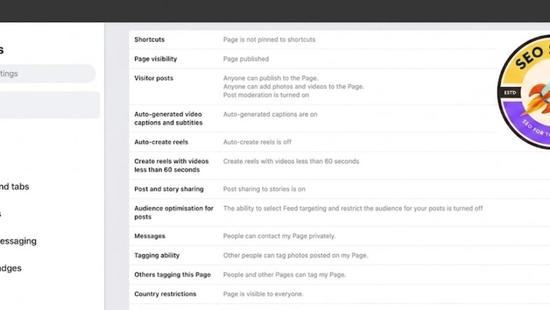
- Click Settings in the left navigation, then choose Page settings (or scroll to find the Privacy section in newer layouts).
- Under Page management, find the option Deactivation and deletion. Click it to open the page lifecycle screen.
- Choose Delete page rather than Deactivate page if you want a permanent removal. Deactivation only hides the page; it can be reversed at any time.
- Read the warning about what will be lost — followers, posts, photos, reviews, and the page's username — and click Continue.
- Re-enter your account password to confirm. Meta will schedule the deletion to take effect in 30 days. Until then, you can cancel from the same screen.
Pro tip: if you don't see the Delete option, check whether the page is owned by a Business Manager. If it is, you may need to first remove the page from the business, or run the deletion from Business Settings → Accounts → Pages instead of from the page itself. For agencies and developers managing pages programmatically, the Facebook Graph API exposes a similar deletion endpoint, but most teams find the UI safer for one-off deletions.
When should you delete a Facebook business page?
Here are the scenarios where deletion is the right move, plus when you should consider deactivation instead.
1. The page is part of a closed business
If the underlying business has closed permanently and there's no plan to revive the brand, deletion is appropriate. Leaving an inactive page up creates confusion — customers may try to message you, leave bad reviews about ghost service, or assume the business is still trading. A closed restaurant chain, for example, should delete each location's page once final claims and refunds are handled.
2. You created a duplicate during a rebrand
Rebrands often produce duplicate pages — the old brand's page and the new one. Once you've migrated followers, content, and reviews to the new page (or accepted that the new one will start fresh), delete the duplicate so search engines and customers find the right page. Leaving the old page live splits your audience and search traffic.
3. The page was set up by a former employee or agency
Inherited pages from departed employees, ex-agencies, or one-off campaigns often accumulate over the years. If you can secure full admin access, audit the page, and confirm there's no historical content worth keeping, deletion is the cleanest end state. Make sure to remove the page from your Business Manager first so the business hierarchy stays tidy.
4. You're consolidating multiple location pages
Multi-location businesses sometimes start with a Facebook page for each branch, then consolidate to a single hub-and-spoke structure. Deleting redundant location pages removes the duplicate-content risk, simplifies admin, and ensures customers land on the canonical page. Use Facebook's location structure (a parent page with child locations) for the consolidated setup.
5. The page conflicts with a personal account
If you originally built a personal-feeling brand on a personal profile and only later created a business page, there's sometimes an awkward overlap. Deleting the underused or off-brand page lets you commit fully to whichever account represents the brand best.
Free SEO + AI Search Audit. Cleaning up your social presence is easier when you know what's actually pulling weight. Our free audit will show you which channels are sending qualified traffic and which AI answer engines are citing your brand — clarity before consolidation. Run your free audit →
Limitations and gotchas
- The 30-day window is firm: deletion doesn't happen immediately; it's scheduled. If you re-login during the 30 days, Meta may interpret that as cancellation and require you to start over.
- Pages owned by Business Manager need extra steps: if your page sits inside a Business Manager, you may need to remove the page from the business or run the deletion from Business Settings.
- Some assets must be transferred first: ad accounts with active spend, pixels with live events, and Instagram-linked accounts often block deletion until they're disconnected or reassigned.
- Usernames become available again: your @username can be claimed by anyone after deletion — squat on the handle if the brand could return.
- Reviews can resurface in search: Google and Bing may continue to show cached review snippets for weeks after the page is gone. Reach out to search engines if a specific cached page is hurting you.
- Mobile and desktop UIs diverge: Meta's mobile apps occasionally don't expose the delete flow. If you can't find the option on mobile, use Meta Business Suite on desktop.
Final thoughts
Deleting a Facebook business page is straightforward once you know the path: open Meta Business Suite, switch to the correct page, head into Page settings → Deactivation and deletion, and pick deletion rather than deactivation. The trickier part is everything you do before that — exporting content, reassigning connected assets, and giving your audience a heads-up so the transition is clean.
The practical habit to build: any time you launch a new Facebook page, document the page ID, the owning Business Manager, and the connected assets in a short README. Future-you (or whoever inherits the account) will thank you when it's time to retire or migrate the page later.
And once your social properties are tidy, take a look at where else your brand shows up online. AI answer engines and Google search are increasingly the first touchpoint for prospective customers — start with our guide on how to rank in ChatGPT, Claude, and Perplexity, then run your free SEO + AI search audit to see exactly which pages and brands are getting cited for the queries your customers ask.